
What Is the Difference Between Direct Fired Burners and Radiant Tube Burners?
In industrial heating applications, selecting the right burner technology is critical for achieving optimal efficiency, product quality, and environmental compliance. Two of the most common burner types are direct fired burners and radiant tube burners, but they operate on fundamentally different principles and serve distinct purposes. A direct fired burner combusts fuel directly in the process area, with the hot combustion gases coming into contact with the material being heated. In contrast, a radiant tube burner encloses the flame within a sealed tube, and heat is transferred primarily through radiation from the tube surface to the target material, without any contact between the combustion gases and the product. At Tianjin Huashuo Machinery Manufacturing Co., Ltd., our factory has been designing and manufacturing industrial burners for over 25 years, and we have extensive experience in both technologies.
The choice between direct fired and radiant tube burners has significant implications for process performance, energy consumption, and product quality. Direct fired burners offer higher thermal efficiency because they utilize the full heat content of the combustion gases, but they also introduce combustion byproducts into the process environment, which can be detrimental for sensitive materials. Radiant tube burners, on the other hand, isolate the combustion process, enabling precise temperature control and a cleaner process atmosphere, but they generally operate at slightly lower overall efficiency due to heat losses through the tube wall and exhaust gases. Our factory has developed advanced Radiant Tube Burner designs that minimize these losses through optimized tube geometry, improved heat transfer surfaces, and high-efficiency recuperators. In this guide, we will dissect the engineering, performance, and economic aspects of both burner types, provide detailed technical specifications, and offer practical guidance for selecting the right burner for your application.

Table of Contents
- 1. What Is the Operating Principle of Direct Fired Burners?
- 2. How Do Radiant Tube Burners Work and Why Are They Preferred for Sensitive Processes?
- 3. What Are the Key Technical Specifications of Our Radiant Tube Burner?
- 4. How Do Efficiency and Emissions Compare Between the Two Burner Types?
- Frequently Asked Questions (FAQ)
- Conclusion and Burner Selection Consultation
What Is the Operating Principle of Direct Fired Burners?
Direct fired burners are the simplest and most efficient form of industrial combustion. In a direct fired system, fuel (natural gas, propane, or oil) is mixed with air and ignited in a combustion chamber that is open to the process area. The resulting hot combustion gases—consisting primarily of carbon dioxide, water vapor, and nitrogen—are released directly into the space being heated. This could be a drying oven, a paint booth, a heat treatment furnace, or a large space heater. The direct contact between the combustion gases and the material being heated allows for extremely high heat transfer rates and thermal efficiencies of up to 95 percent (on a lower heating value basis). Our factory at Tianjin Huashuo Machinery Manufacturing Co., Ltd. produces direct fired burners with advanced flame monitoring and modulating controls that ensure stable combustion across a wide range of firing rates.
Key characteristics of direct fired burners:
- Direct heat transfer: Combustion gases come into direct contact with the material, providing rapid and efficient heating. This is ideal for applications where the product is not sensitive to the combustion byproducts or where the exhaust gases are vented quickly.
- High thermal efficiency: Because the heat of the combustion gases is fully utilized within the process space, direct fired burners typically achieve efficiencies of 85-95 percent, with some modern condensing units exceeding 100 percent (based on LHV).
- Simple design: Direct fired burners have fewer components than radiant tube systems—no tube, no radiant surface, and no need for external recirculation. This makes them more affordable and easier to maintain.
- Potential for product contamination: The combustion gases, which contain CO2, water vapor, and trace amounts of CO and NOx, come into contact with the product. This can cause oxidation, discoloration, or chemical reactions in sensitive materials such as food products, textiles, or certain metals.
- Ventilation requirements: Direct fired systems require adequate ventilation to remove combustion gases and replenish oxygen, which can be a significant energy cost if the exhaust air is not recovered.
Direct fired burners are widely used in applications where product contamination is not a concern, and where rapid heating is the primary requirement. Examples include: industrial dryers for sand, aggregate, and ceramics; paint curing ovens with adequate exhaust; large space heaters for warehouses and workshops; and agricultural grain dryers. In these applications, the high efficiency and low capital cost of direct fired burners make them the economic choice. However, for processes where product quality or purity is paramount, or where the combustion gases would adversely affect the material, a radiant tube burner is often the better option.
From a control perspective, direct fired burners are relatively straightforward. The burner is typically controlled by a simple on-off or modulating controller that adjusts the fuel and air flow based on a temperature sensor in the process space. Our factory offers a range of direct fired burners with electronic cam controls that provide precise air-fuel ratio management, ensuring low emissions and high efficiency across the firing range. We also provide safety features such as flame detection, high-temperature limit switches, and purge cycles that meet international safety standards. While direct fired burners are not suitable for every application, their simplicity and efficiency make them a staple of industrial heating.
How Do Radiant Tube Burners Work and Why Are They Preferred for Sensitive Processes?
Radiant tube burners are an indirect heating technology where the combustion process is enclosed within a sealed tube, and heat is transferred to the process environment primarily through thermal radiation from the tube's outer surface. The burner fires into one end of the tube, and the hot combustion gases travel along the tube, heating it to high temperatures (typically 800-1,100°C). The heat is then radiated from the tube to the surrounding material or atmosphere. Because the combustion gases are completely contained within the tube, there is no contact between the flame gases and the product being heated. This makes radiant tube burners ideal for processes where a clean atmosphere is required, such as metal heat treatment, ceramic firing, and textile drying, where any contamination would be detrimental to product quality. Our factory at Huashuo Machinery has developed a range of Radiant Tube Burner designs that optimize heat distribution, minimize temperature gradients, and achieve high thermal efficiency through the use of recuperators and advanced tube materials.
Key characteristics of Radiant Tube Burner systems:
- Indirect heating: The combustion gases are isolated from the process, eliminating the risk of contamination, oxidation, or chemical reaction with the product. This is essential for applications such as bright annealing, where even trace oxygen would cause surface discoloration.
- Uniform temperature distribution: Radiant tube burners can be designed with multiple burners or with special tube geometries (e.g., U-tubes or W-tubes) to achieve a uniform temperature profile across the furnace, ensuring consistent product quality.
- Atmosphere control: Because the combustion gases are contained, the process atmosphere can be independently controlled (e.g., with inert gases or controlled oxygen levels), enabling precise process conditions.
- Lower thermal efficiency (without recuperation): In a basic radiant tube burner, heat is lost through the tube wall and in the exhaust gases. Efficiencies typically range from 45 to 55 percent for non-recuperated designs. However, with the addition of a recuperator or a regenerative system, efficiencies can be increased to 75-85 percent.
- Higher initial cost: Radiant tube burner systems are more expensive than direct fired burners due to the additional components (tube, recuperator, etc.) and the need for more precise control.
The application of Radiant Tube Burner is diverse and includes: metal heat treatment furnaces (annealing, hardening, tempering), ceramic and porcelain kilns, textile drying and curing ovens, food processing (baking, drying of sensitive ingredients), and chemical processing where a clean atmosphere is required. In these applications, the ability to maintain a contamination-free environment often justifies the higher capital and operating costs of the radiant tube system.
Our factory has engineered our Radiant Tube Burner to include a high-performance recuperator that preheats the combustion air using the hot exhaust gases, significantly improving efficiency. We have also developed a self-recuperative tube design that integrates the recuperator into the burner body, reducing the overall footprint and simplifying installation. In terms of control, our Radiant Tube Burner is equipped with a high turndown ratio (up to 10:1) that allows for precise temperature modulation, ensuring that the furnace operates at the exact temperature required for the process. This level of control is essential for achieving consistent product quality in sensitive processes. By choosing a Radiant Tube Burner from Tianjin Huashuo Machinery Manufacturing Co., Ltd., you can achieve the cleanliness and temperature uniformity that direct fired systems cannot provide.
What Are the Key Technical Specifications of Our Radiant Tube Burner?
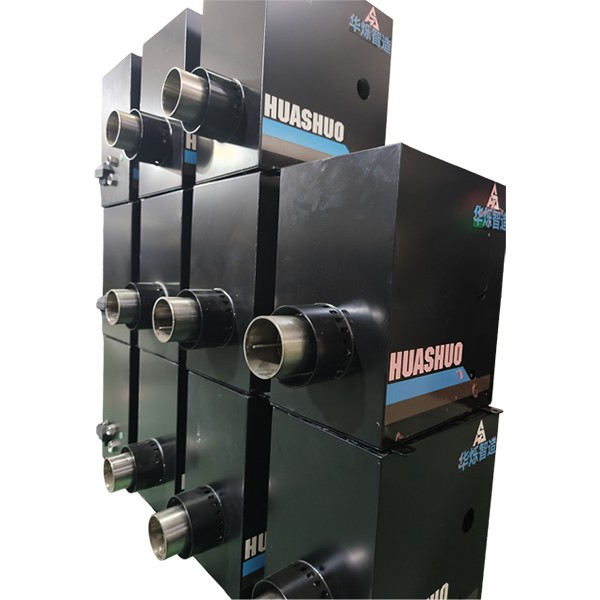
Tianjin Huashuo Machinery Manufacturing Co., Ltd. manufactures a comprehensive range of Radiant Tube Burner systems, designed for various industrial heating applications. Our product line includes single-ended tube burners, U-tube burners, and W-tube burners, with power ratings from 50 kW to 2,000 kW. All our Radiant Tube Burner products are manufactured in accordance with ISO 9001 and meet or exceed the requirements of EN 746 and NFPA 86 standards. The table below summarizes the key technical specifications for our most popular Radiant Tube Burner models, which are used in heat treatment, drying, and ceramics industries worldwide. Our factory can also produce custom tube geometries and power ratings to meet specific furnace requirements.
| Model | Power Rating (kW) | Tube Type | Tube Diameter (mm) | Tube Length (mm) | Efficiency (with recuperator) | Maximum Operating Temperature (°C) | Turndown Ratio |
| HS-RT-50 | 50 | Single-ended | 150 | 1,000 | 75% | 1,050 | 8:1 |
| HS-RT-100 | 100 | Single-ended | 180 | 1,500 | 78% | 1,050 | 8:1 |
| HS-RT-200 | 200 | U-tube | 220 | 2,000 | 80% | 1,100 | 10:1 |
| HS-RT-300 | 300 | U-tube | 250 | 2,500 | 82% | 1,100 | 10:1 |
| HS-RT-500 | 500 | W-tube | 300 | 3,000 | 84% | 1,150 | 10:1 |
| HS-RT-800 | 800 | W-tube | 350 | 4,000 | 85% | 1,150 | 10:1 |
| HS-RT-1200 | 1200 | W-tube | 400 | 5,000 | 86% | 1,150 | 12:1 |
In addition to the standard models, our factory offers several optional features to enhance the performance and durability of Radiant Tube Burner systems. These include: high-temperature alloys (such as Inconel 601 or RA330) for the tube material to extend life in corrosive environments; ceramic fiber liners for improved insulation; and advanced flame monitoring systems with self-diagnostics. We also offer complete burner control panels with PLC-based control, temperature profiling, and data logging capabilities for process tracking and quality assurance.
Our quality control process includes a 100 percent pressure test on every Radiant Tube Burner assembly, ensuring that there are no leaks in the tube or the burner head. We also conduct a thermal performance test on random samples to verify the efficiency and temperature distribution of the tube. Each Radiant Tube Burner is supplied with a detailed test report, including efficiency data, temperature profiles, and emission measurements. Our factory at Tianjin Huashuo Machinery Manufacturing Co., Ltd. maintains a comprehensive inventory of standard components, enabling fast delivery and quick turnaround on custom orders. We also provide a site commissioning service to ensure that the Radiant Tube Burner is correctly installed and operating at its optimal efficiency.
How Do Efficiency and Emissions Compare Between the Two Burner Types?
The choice between a direct fired burner and a Radiant Tube Burner is often influenced by a trade-off between efficiency and process cleanliness. Direct fired burners offer higher thermal efficiency because all the heat from combustion is released directly into the process. However, this efficiency comes at the cost of introducing combustion gases into the process atmosphere. Radiant tube burners, while isolating the combustion gases, suffer from heat losses through the tube wall and in the exhaust gases, resulting in lower overall efficiency. However, with the incorporation of recuperators or regenerative air preheaters, the efficiency gap can be significantly narrowed. Our factory has developed a range of high-efficiency Radiant Tube Burner designs that achieve efficiencies of up to 86 percent, making them competitive with direct fired systems in many applications.
Efficiency comparison between direct fired and Radiant Tube Burner:
- Direct fired burner efficiency: Typically 85-95 percent (based on LHV). The high efficiency is due to the direct use of the heat of combustion. However, if the process requires ventilation to remove combustion gases, the energy loss from the exhaust air can reduce the system efficiency.
- Radiant Tube Burner efficiency (non-recuperated): 45-55 percent. The heat loss through the tube wall and in the exhaust gases is significant, and the efficiency is limited by the temperature of the exhaust gas leaving the tube.
- Radiant Tube Burner efficiency (with recuperator): 75-86 percent. A recuperator preheats the combustion air using the hot exhaust gases, recovering a large portion of the heat that would otherwise be lost. Our factory's Radiant Tube Burner with integrated recuperator achieves up to 86 percent efficiency, closing the gap with direct fired systems.
- Emissions: Direct fired burners produce NOx, CO, and CO2 that are released directly into the process or into the atmosphere. This can be an issue in areas with stringent emissions regulations. Radiant Tube Burners can incorporate low-NOx burner technology and flue gas treatment, and because the combustion gases are contained, they can be more easily treated before release. Our Radiant Tube Burner uses a staged combustion design that reduces NOx emissions to below 50 mg/Nm3 (at 3% O2), meeting the most stringent environmental standards.
To illustrate the impact of efficiency, consider a 500 kW furnace operating 8,000 hours per year. A direct fired burner at 90 percent efficiency would consume approximately 5,000 MWh of fuel per year (based on natural gas LHV of 10 kWh/m3). A non-recuperated radiant tube burner at 50 percent efficiency would consume 9,000 MWh—a difference of 4,000 MWh, which at a typical industrial gas price could be over USD 400,000 per year. However, a recuperated Radiant Tube Burner at 85 percent efficiency would consume only 5,300 MWh, reducing the difference to a manageable 6 percent. In many cases, the additional cost of the recuperated Radiant Tube Burner is recovered within 1 to 2 years through fuel savings.
In terms of emissions, direct fired burners release all combustion gases into the process area. If the process requires ventilation, the emissions are diluted and released to the atmosphere, but they still represent a potential environmental burden. Radiant Tube Burners, on the other hand, allow for more controlled emission treatment. Our factory's Radiant Tube Burner uses a flue gas recirculation system that reduces NOx formation, and the exhaust can be routed to a catalytic converter or scrubber if required. This makes radiant tube burners a more environmentally friendly choice, particularly in regions with stringent air quality regulations. The decision between the two burner types ultimately depends on the specific process requirements, including product sensitivity, regulatory environment, and the relative cost of fuel and capital equipment.
Frequently Asked Questions (FAQ)
Question 1: Can a direct fired burner be converted to a radiant tube burner in an existing furnace?
Answer: Converting a direct fired furnace to a radiant tube system is a significant modification that is usually not economically feasible. Radiant tube burners require the installation of tubes, a different burner mounting configuration, and often a different combustion chamber geometry. Additionally, the controls and ventilation systems need to be modified. In most cases, it is more cost-effective to replace the entire furnace or to design a new furnace with the required burner technology. Our factory at Tianjin Huashuo Machinery Manufacturing Co., Ltd. offers both direct fired and Radiant Tube Burner systems, and we can provide a feasibility study and cost-benefit analysis for your specific situation.
Question 2: Which burner type is more suitable for heat-treating steel to prevent oxidation?
Answer: A radiant tube burner is the preferred choice for steel heat treatment to prevent oxidation. Because the combustion gases are contained within the tube, the steel is not exposed to oxygen, CO2, or water vapor, which would cause surface oxidation. The furnace atmosphere can be controlled separately, often with an inert gas such as nitrogen or argon, to achieve the desired metallurgical properties. Direct fired burners are not recommended for this application as the combustion gases would react with the steel surface, causing decarburization and scale formation.
Question 3: What is the typical service life of a radiant tube burner tube?
Answer: The service life of a radiant tube depends on the operating temperature, the tube material, and the frequency of thermal cycling. For a standard Radiant Tube Burner operating at 1,050°C with Inconel 601 tubes, the typical service life is 3 to 5 years. In high-temperature or corrosive environments, we offer tubes made from RA330 or other specialty alloys that can extend the life to 7-10 years. Our factory provides a tube life expectancy estimate based on your specific operating conditions and can recommend periodic inspection intervals to ensure the tube is replaced before failure.
Question 4: How does the cost of operation compare between direct fired and radiant tube burners?
Answer: The operating cost of a direct fired burner is generally lower due to its higher efficiency. However, if the process requires ventilation or the product is sensitive to contamination, the energy cost of conditioning the ventilation air may offset the efficiency advantage. Radiant tube burners, especially with recuperators, have a higher capital cost but can offer comparable operating costs when accounting for the energy savings from the recuperator. Our factory provides a detailed cost comparison analysis that includes fuel consumption, maintenance, and potential emission control costs to help you make an informed decision.
Question 5: Does Tianjin Huashuo Machinery Manufacturing Co., Ltd. offer both direct fired and radiant tube burners, or only radiant tube burners?
Answer: Our factory manufactures both direct fired and Radiant Tube Burner systems, offering a complete range of industrial heating solutions. This allows us to provide objective advice on the best technology for your application. We have extensive experience in both technologies and can design, manufacture, and commission a complete burner system tailored to your specific process requirements. Whether you need a high-efficiency direct fired burner for a drying application or a clean Radiant Tube Burner for heat treatment, we have the expertise and product portfolio to meet your needs.
Conclusion: Choose the Right Burner Technology for Your Application
The choice between direct fired burners and radiant tube burners is not about which is "better," but about which is more suitable for your specific process requirements. Direct fired burners offer high efficiency and simplicity, making them ideal for applications where product contamination is not a concern. Radiant Tube Burner systems provide a clean, contamination-free heating environment, essential for sensitive materials, but require additional investment in tube technology and recuperators to achieve competitive efficiency. At Tianjin Huashuo Machinery Manufacturing Co., Ltd., our factory has the experience and engineering capability to design, manufacture, and commission both burner types, ensuring that you receive the optimal solution for your application.
Are you evaluating burner options for a new furnace or considering an upgrade? Contact Tianjin Huashuo Machinery Manufacturing Co., Ltd. today for a comprehensive burner selection consultation. Our team will analyze your process conditions, heating requirements, and environmental constraints, and provide a detailed recommendation, including a cost-benefit analysis and a proposed system configuration. We offer free burner design services, competitive pricing, and a full warranty on all our products. Request your free burner consultation now from Tianjin Huashuo Machinery Manufacturing Co., Ltd. and make the right choice for your industrial heating needs.
Related News
- Can field‑operating deviations cut Powder Coating Curing Burner long‑run production yield?
- How Does a High Efficiency Metal Fiber Infrared Burner Improve Industrial Heating?
- What costly operational pitfalls emerge from poorly qualified baking‑grade radiant burner assemblies?
- How Does a Power Series Infrared Burner Improve Commercial Heating Performance?
- How Does a Flameless Catalytic Infrared Burner Improve Industrial Heating Efficiency?
- Where lies the core advantage of compact radiant burners for steel furniture powder coating lines?
Leave me a message